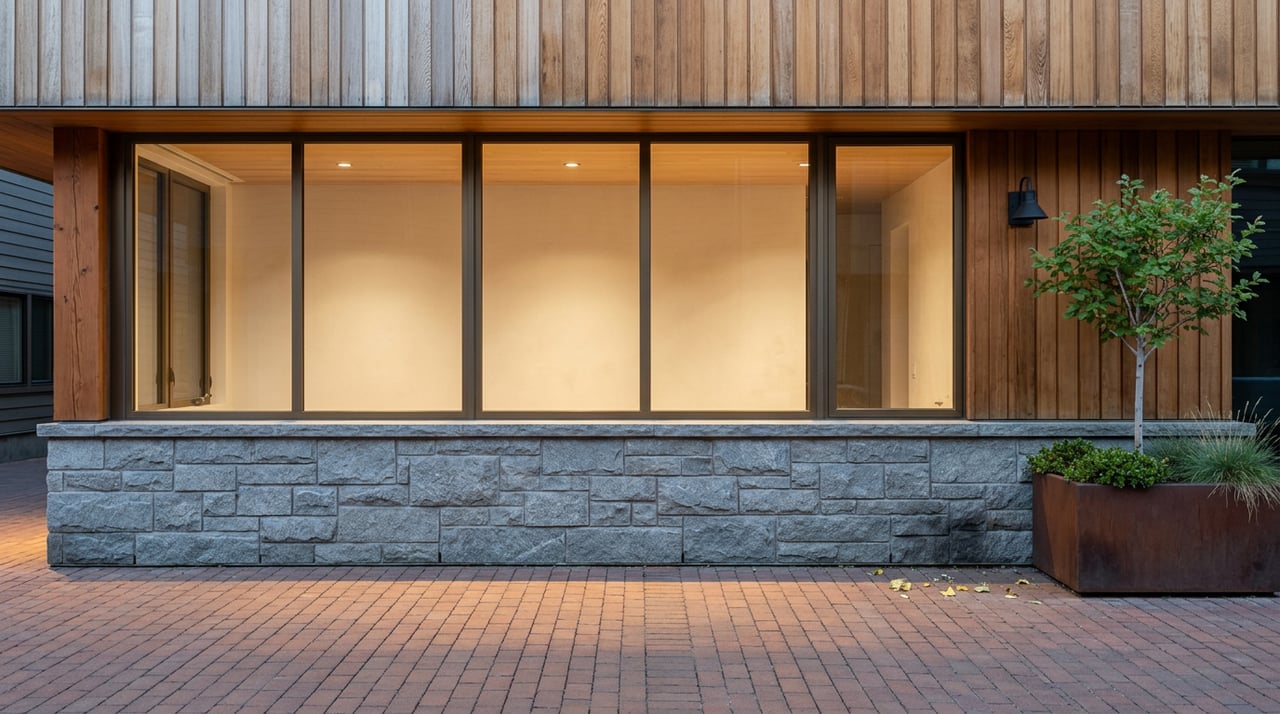
If you have walked past 422 E. Cooper Avenue this summer around a quarter to five on a Tuesday, you have probably seen the small crowd already gathered on the sidewalk. Locals in shorts and trail dust, a few families, the same three guys who play chess at Paepcke Park in the mornings. Doors open at five. Nobody is dressed for a concert.
That is the tell. The room upstairs was designed for JAS Café weekend audiences and Labor Day patrons, but the night that has actually reshaped how residents use downtown is the free one in the middle of the week.
The thesis, in one sentence
The Paul JAS Center opened on the Cooper Avenue Mall in December, and after six months of programming the pattern is clear: the venue's real contribution to Aspen is not the marquee weekend shows, it is a permanent, walkable, weeknight anchor that the town has never had at this scale.
JAS is running a minimum of 50 nights of public Café-format shows in 2026, with private events and nonprofit collaborations eating up another 25. That is roughly triple the pace of the old pop-up years at the Little Nell and the Aspen Art Museum, and it means that on almost any given weeknight from July through September, there is something live and ticketed within a five-block radius of Wagner Park.
For anyone who already lives here, the interesting question is not whether to go. It is how to read a schedule this dense without burning out on it.
What actually happens on a Tuesday
Every Tuesday of the summer is Community Night, with a rotating mix of free programming that includes open mic, music trivia, local band showcases and salsa nights. Doors open at 5 p.m., and there is a discounted food and drink menu. No ticket, no reservation, no dress code implied by the room.
The programming rotates, but a typical month looks something like this:
- One open mic anchored by a resident host
- One trivia night keyed to a genre or era
- One local band showcase pulled from the Roaring Fork Valley scene
- A themed dance night, usually salsa, occasionally two-step
Free Salsa After Dark Nights led by Mezclas Social Dance are set for July 11 and August 8, and those two dates are the ones to circle if you have never been. The floor is small enough that a beginner class works, and large enough that experienced dancers do not spend the night bumping elbows.
The 6:30 set is the local's set
The JAS Café Summer Series runs 23 nights from July through September, with two performances each night at 6:30 and 9 p.m. That double-set schedule is the mechanical reason downtown feels different this year.
The 9 p.m. show is what most guides will point you toward. It is the traditional jazz club slot, and it draws visitors who have already eaten dinner somewhere on Restaurant Row. The 6:30 show is the one built for people who live here. You can walk over from a workday, catch a full 75-minute set, and be home by eight thirty with time to put a kid to bed or take the dog out before dark.
The pricing supports the same read. The Café-Dance format uses standing-room-only tickets priced at $30, with dining available before or during the show from a small-plate menu by Epicure Catering, the in-house culinary team. Thirty dollars, on foot, with dinner optional, on a random Thursday, is a version of downtown nightlife that has been missing for years.
"People seem to agree that this is a breath of fresh air and exactly what Aspen needed," JAS founder Jim Horowitz told Aspen Sojourner in its Summer/Fall 2026 issue.
The quote reads like boilerplate until you notice what he actually built into the calendar to back it up. Roaring Fork Valley residents can buy an "All That JAS" membership for $100 that includes early announcements, first-chance access to Paul JAS Center tickets, 20 percent off all late shows, and invitations to select events. The passes are only available to purchase in person. A locals' discount that requires you to walk into the building is a philosophy, not a marketing tactic.
Nights to build a summer week around
The full summer schedule leans jazz, but the range is wider than the name suggests. A few of the dates worth planning a Wednesday dinner or a Friday babysitter around:
- July 3, James Hunter Six. British rhythm and soul on the Café-Dance floor, the July 4th weekend opener.
- July 4, Bonerama. The "all trombone" band and New Orleans natives, second night of the July 4th weekend Café-Dance.
- July 11, Salsa After Dark. Free, with Mezclas Social Dance running the floor.
- July 17, The Boneshakers. Soulful blues and funk in the Café-Dance format.
- August 8, Etienne Charles. The JAS Café closer for the JAS Academy Afro-Caribbean session, which runs July 27 through August 10 under the Trinidad-born trumpeter and Guggenheim Fellowship recipient.
- Debut nights across the season. The Brass-A-Holics, blues artist D.K. Harrell, multi-Grammy-winning trumpeter Randy Brecker, and the funk-jazz Golding Bernstein Stewart B-3 Organ Trio all make their Café-stage debuts. Jazz vocalist Ashley Pezzotti debuts, and the multi-Grammy-winning vocal group The New York Voices makes its Aspen debut celebrating 36 years of performing.
That last cluster is where the "information gain" of living here shows up. A debut in a 200-seat room, in a town this small, is a chance to see an artist at close range that you will not get again once they have played the Klein Music Tent or the Belly Up main floor.
The Red Onion inheritance
Part of what makes the room work is that it is not a new place, it is a new use of a very old one. JAS committed to the property in 2018, when space next to and above the Red Onion became available. Aspen's oldest bar dates to 1892, and its musical history includes Billie Holiday, who played six nights in 1952, along with Ella Fitzgerald, Duke Ellington, and Oscar Peterson in the 1950s.
You can hear the inheritance in the acoustics. Sound design was led by the Connecticut firm Jaffe Holden, and the room uses a mix of sound-absorbing and reflecting surfaces, angled subtly to modulate sound and eliminate echoes, with a floating floor that keeps vibrations from affecting the ground-level store below.
The practical outcome for a listener is that the room is loud when the band wants it loud and quiet when the singer wants it quiet, without the mid-frequency mud that a lot of retrofits in old buildings never quite solve.
The street-level entrance opens onto a lobby, a gallery, and a stairway to the second-floor performance space, with photos by Aspen photographer Steve Mundinger of artists who have performed at JAS over the years hanging in the lobby. If you have not been in, the gallery is worth ten minutes on its own on a weekday afternoon.
A resident's playbook for the summer
Six months of watching how people actually use the room suggests a short operational sequence:
- Buy the $100 membership in person. The 20 percent off late shows pays for the pass in three or four visits, and the early-announcement email is the only reliable way to catch the shows that sell out in a day.
- Default to the 6:30 set. You will eat dinner earlier, get home at a reasonable hour, and pay less attention to whether the room is at capacity.
- Use Tuesdays for anything that requires a group. Community Night is free, ticketless, and forgiving of a rotating cast of friends. It is the easiest re-entry point for anyone who has been away from downtown evening life for a year or two.
- Watch the debut dates. Randy Brecker, The New York Voices, Ashley Pezzotti and D.K. Harrell will all play larger rooms elsewhere. Their first Aspen sets are on a floor where you can see the horn valves move.
- Treat the Salsa After Dark nights as a scheduled July and August event. July 11 and August 8, free, with an instructor-led floor. Bring a partner or do not, it works either way.
- Give yourself an "off" week. Twenty-three summer nights in a single downtown room will exhaust anyone who tries to see them all. Skip a week in mid-August. The room will still be here in September.
The larger point for anyone who has lived in Aspen long enough to remember the pre-Café years is that the town has quietly built itself a piece of infrastructure it did not have. Weeknight programming inside a walkable radius, at a price point that a household budget can absorb, in a room with real acoustics, running from December through September. That is a permanent change in what a Tuesday can look like here, not a summer novelty.
If you are thinking about how a change like this affects the value of a downtown condominium within walking distance of Cooper Avenue, or how walkability weighs against the quieter West End for your next move, Jessica Hughes is available to talk it through. Schedule a confidential consultation whenever the season slows down enough that you can hear yourself think.