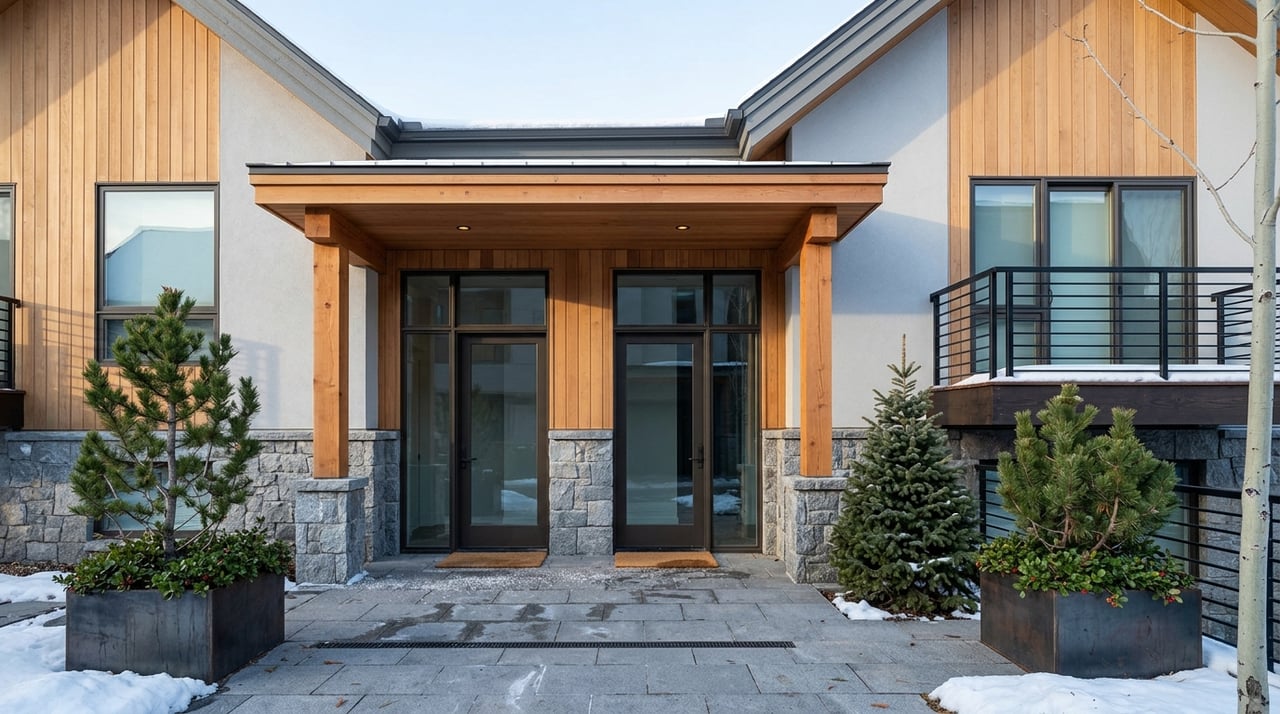
Wondering whether an Aspen condo or a single-family home makes more sense for your lifestyle? In a market shaped by limited land, seasonal ownership, and very different ways people use property, the right choice is rarely just about square footage. If you are weighing convenience, privacy, ski access, upkeep, or future rental use, this guide will help you think through the trade-offs clearly. Let’s dive in.
Why this choice matters in Aspen
Aspen is not a one-size-fits-all market. The city’s planning framework reflects limited land, a formal Urban Growth Boundary, and a long-standing goal of preserving open space, scenic settings, and neighborhood character. That means your decision between a condo and a home is happening in a market where supply, setting, and day-to-day function all matter.
Aspen also has a meaningful seasonal and second-home presence. The city’s Community Connections dashboard reported 3,195 occupied households out of 5,855 total housing units in its 2016 snapshot, and from 2010 to 2016 it said 54% of units were permanent residences while 46% were not primary homes.
Those numbers are best used as context, but they help explain why some buyers prioritize lock-and-leave convenience while others want more privacy and a more residential feel.
Aspen condos: convenience and access
For many buyers, condos and townhomes make the most sense when ease of ownership is a top priority. In Aspen, attached properties often appeal to people who want a central base for skiing, dining, events, and quick trips without taking on full exterior maintenance. That can be especially attractive if you split time between Aspen and another home.
The practical appeal is easy to see in town. Aspen Mountain is the town mountain, and the Silver Queen Gondola connects downtown with the slopes. The city also offers free shuttles, free airport buses, the Downtowner, car-share, bike share, and bike and walk infrastructure, while RFTA provides fare-free service between Aspen and Snowmass Village.
That transportation network supports a lifestyle where you can rely less on a car and more on location. In-town condos and townhomes can be a strong fit if you want walkability, quick ski access, and easy access to Aspen’s broader amenity base. The city’s dashboard also notes a wide range of local amenities, including cultural offerings, open spaces and preserves, parks, ski areas, and trails.
What condo ownership usually means
In Colorado, the Common Interest Ownership Act generally places maintenance of common elements on the association and maintenance of the unit on the owner unless governing documents say otherwise.
HOA assessments commonly help fund maintenance, landscaping, insurance, legal fees, registration fees, and other operating costs. In simple terms, condos and townhomes often reduce exterior upkeep, but they also come with shared governance and monthly dues.
That trade-off matters in Aspen, where weather and seasonal use can make maintenance more noticeable. DORA’s winterizing guidance underscores that snow removal is a major HOA responsibility in attached communities. For some buyers, that is a major advantage because it supports a true lock-and-leave setup.
Condo advantages to consider
- Easier exterior maintenance
- Often better walkability to downtown amenities
- Stronger fit for lock-and-leave ownership
- Convenient access to transit and ski infrastructure
- Shared amenities in some communities
Condo questions to ask
- How healthy is the HOA budget and reserve fund?
- What do dues cover?
- What has the assessment history looked like?
- What insurance is covered by the HOA master policy?
- Are there rental restrictions in the HOA documents?
Aspen homes: privacy and control
Single-family homes usually appeal to buyers who want more privacy, more autonomy, and more room to spread out. In Aspen, that can mean a quieter setting, more separation from neighbors, and greater flexibility for outdoor living. Depending on location, it can also mean a very different daily rhythm from the in-town condo experience.
The Aspen Area planning boundary extends beyond downtown into areas such as Red Mountain, East of Aspen, the Airport Business Center, the airport, Buttermilk Base, and parts of Castle Creek and Maroon Creek. That broader geography matters because Aspen-area ownership is not only about downtown convenience. It can also be about choosing a more secluded property while staying within the same overall resort market.
If your priority is privacy, outdoor space, or a more independent ownership style, a house may fit better. You may have more freedom over exterior maintenance decisions, landscaping choices, and how you use outdoor areas such as decks or yards. The trade-off, of course, is that more of the repair, snow, and maintenance responsibility falls on you.
What home ownership usually means
Unlike condo ownership, a single-family home usually comes with fewer shared rules on common maintenance because there is no association handling the building exterior and shared spaces in the same way. That can be a benefit if you value control. It can also mean more ongoing responsibility, especially in a mountain environment where weather, snow management, and exterior upkeep are part of ownership.
Home advantages to consider
- More privacy
- More control over exterior decisions
- Better fit for outdoor living
- Potentially more space for guests or entertaining
- Less dependence on HOA governance
Home questions to ask
- How much maintenance do you want to handle?
- How important is privacy compared with walkability?
- Do you want a yard, deck, or more outdoor space?
- Will you use the property often enough to justify the upkeep?
- Do you prefer town convenience or a quieter setting?
Insurance and monthly carrying costs
A condo’s lower-maintenance appeal should never be judged by purchase price alone. According to Colorado guidance, the HOA master policy generally covers common areas and the building structure, while owners typically need HO6 coverage for their contents and portions of the unit not covered by the master policy. Owners may also face deductibles or loss assessments.
That means your real monthly carry in an Aspen condo or townhome should include more than dues. You will want to evaluate the HOA budget, reserve health, insurance structure, and assessment history together. A home may not have HOA dues at the same level, but you may take on more direct maintenance and insurance responsibility yourself.
Rental flexibility can change the answer
If you may rent the property at times, Aspen’s short-term rental rules are important. The city requires a permit for rentals under 30 days. Owner-occupied permits are limited to 120 nights per year and require proof of primary residence, while Classic permits can be capped and waitlisted in some zones, and lodge and condo-hotel properties follow separate rules.
This is one of the biggest reasons to look beyond the property itself. Before choosing a condo, townhome, or house, you should verify both city permitting rules and any HOA rental restrictions. A property that feels perfect for personal use may not align with your rental goals.
Aspen lifestyle: central base or private retreat
In many cases, the condo-versus-home decision comes down to which Aspen lifestyle fits you better. Some buyers want a central base near the mountain, downtown shops, dining, and events. Others want a more private retreat that feels removed from the center of activity.
Aspen Snowmass lodging examples help illustrate this difference. Downtown-oriented condo properties can offer easy access to the Silver Queen Gondola and walkability to everyday amenities, while ski-in/ski-out condominium options in Aspen and Snowmass Village show how attached living can still deliver a highly convenient mountain experience. On the other side, a detached home may offer a more secluded setting and more private outdoor space, even if it is not as easy to walk everywhere.
Nearby communities may be part of the strategy
You do not have to think about Aspen in isolation. The regional transit network connects Glenwood Springs, Carbondale, El Jebel, Basalt, Snowmass Village, and Aspen. The Aspen Area Community Plan also recognizes that the area depends on commuting workers, second homeowners, tourists, and full-time residents.
That broader regional connection matters if you are balancing access and space. In some cases, buyers explore a more spacious down-valley home while keeping access to Aspen through the corridor. In other cases, they choose a more secluded Aspen-area house and stay connected to town through the broader transportation network.
How to choose your fit
If you are deciding between an Aspen condo and a home, start with how you will actually use the property day to day. Prestige, size, and even finishes matter, but they should come after function. In Aspen, the best fit is often the one that supports your real routine, not your idealized one.
Use these questions as your checklist:
- How often will you live in the property?
- Do you want a true lock-and-leave setup?
- How much exterior maintenance are you willing to manage?
- Is privacy more important than immediate ski or downtown access?
- Do you need outdoor space for relaxing or entertaining?
- Are HOA dues, rules, and reserves acceptable?
- Will short-term rental flexibility matter to you?
- Would a nearby valley town better match your space needs while keeping Aspen access?
The bottom line
In Aspen, condos and townhomes usually make the most sense if you value convenience, access, and lower-touch ownership. Single-family homes usually make the most sense if you value privacy, autonomy, and outdoor living. Because Aspen is land-constrained and shaped by both full-time and seasonal ownership, the right decision often comes down to lifestyle fit more than property type alone.
If you want help weighing these options with local context in mind, JH Realty, Inc offers thoughtful, high-touch guidance tailored to how you plan to live, invest, and move through Aspen and the Roaring Fork Valley.
FAQs
Should you buy a condo or house in Aspen for part-time use?
- If you plan to use the property part time, a condo or townhome may be appealing because attached communities often reduce exterior maintenance and snow-related responsibilities.
What should you review before buying an Aspen condo?
- You should review HOA dues, reserve health, assessment history, insurance structure, maintenance responsibilities, and any rental restrictions.
How do Aspen short-term rental rules affect property choice?
- Rentals under 30 days require a city permit, and the permit type, annual limits, and zone-specific rules can affect whether a condo, townhome, or house fits your rental plans.
Why do some buyers choose a single-family home in Aspen?
- Many buyers choose a home for more privacy, more control over the property, and better access to outdoor living space.
Can nearby Roaring Fork Valley towns be part of an Aspen buying strategy?
- Yes. Regional transit connects Aspen with nearby communities, so some buyers consider a down-valley home for more space while maintaining access to Aspen.