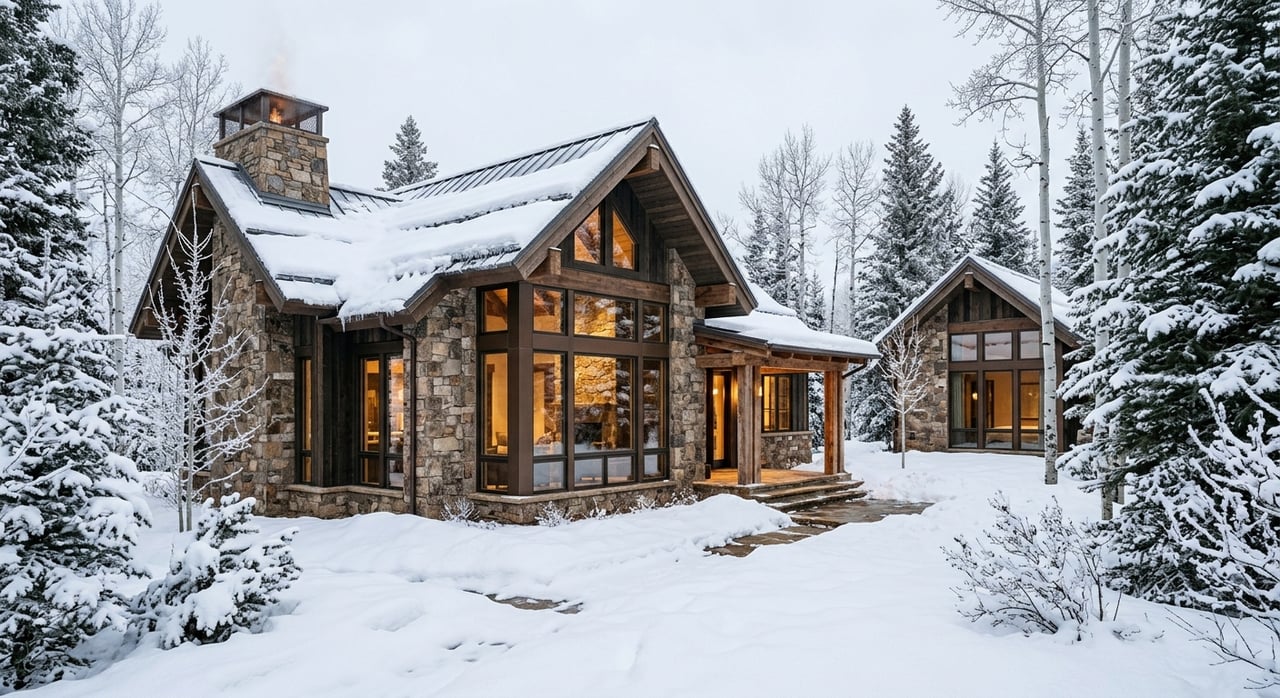
Dreaming about a place your family can return to for decades is exciting. In Old Snowmass, that dream comes with a very real planning question: how do you create a lasting family compound without fighting the land, the views, or Pitkin County rules?
If you are thinking about a multi-generational retreat in the 81654 area, it helps to understand what the county is trying to protect and how smart site planning can support your goals. Let’s dive in.
Why Old Snowmass Fits a Legacy Vision
Old Snowmass appeals to buyers who want space, privacy, and a landscape that still feels rural. In the Snowmass / Capitol Creek Caucus area, Pitkin County uses master planning to help protect the area’s agricultural character and the scale of existing development, especially in the Valleys of Capitol Creek and Lower Snowmass Creek plan area. According to Pitkin County’s caucus planning guidance, those policies are advisory but influential in land-use decisions.
That matters if you are building for the long term. A legacy compound here is less about creating a resort-style cluster of structures and more about placing a family retreat within a setting the county wants to keep open, quiet, and visually restrained. The county’s master plan language makes that clear.
The surrounding landscape supports that same feel. Deer Creek Open Space, near Old Snowmass, blends agricultural use, river access, and wildlife conservation, which reflects the low-density, landscape-first character many buyers are seeking.
Start With the Rules, Not the Floor Plan
If you are picturing a main house, guest quarters, and a few detached outbuildings, start with the regulatory framework before you start designing. In the Valleys of Capitol Creek and Lower Snowmass Creek, the VCLS-O overlay applies throughout the master-plan area, and the more restrictive standard controls if it conflicts with the underlying zoning.
Under that overlay, the final maximum residential floor area is 5,750 square feet, and TDRs cannot be used to increase house size above that cap, based on Pitkin County’s land use code.
That single number shapes almost every early decision. It affects whether your wish list fits in one structure, whether support spaces need to be integrated more efficiently, and whether a detached annex or guest space is realistic for a specific parcel.
A second dwelling or detached family annex should never be assumed. In practice, that is a parcel-specific entitlement question shaped by the overlay, floor-area limits, and accessory-use rules. If you are evaluating land for a compound, this is one of the first issues to review carefully.
Caretaker Space May Be Possible
For some properties, caretaker housing is part of the long-term operating plan. Pitkin County allows one voluntary caretaker dwelling unit as a permitted accessory use in several residential districts, including AR-10. On parcels of 30,000 square feet or more, that unit may be up to 1,000 net livable square feet, and it counts toward the parcel’s total allowed floor area under Chapter 4 of the county code.
That means caretaker space can be helpful, but it is not extra square footage outside the cap. If your goal is flexibility for staff, long visits, or property management, you will want to test those tradeoffs early.
Use a Campus Plan That Respects the Land
In Old Snowmass, the strongest compound designs usually act more like a quiet campus than a large estate spread across open ground. The county reviews site plans and activity envelopes with close attention to slopes, drainage, flood hazards, and wildfire exposure. Pitkin County’s site planning standards make clear that placement matters as much as architecture.
A smart approach is often:
- One principal residence placed carefully within the best building envelope
- Secondary support spaces located where they create the least visual impact
- Shared outdoor areas positioned to preserve open views and usable land
- Driveways and access routes aligned with topography instead of cutting across meadows
This kind of plan usually fits the county’s goals better than a scattered arrangement. It also tends to create a more peaceful experience for your family over time.
Protect Open Land and View Corridors
One of the biggest design mistakes in rural properties is overbuilding the most visible part of the site. In Old Snowmass, the county wants new structures and driveways to preserve open irrigated agricultural lands, fit the topography, avoid dominating the landscape, and use subdued design treatment. Those expectations are spelled out in the VCLS-O overlay standards.
Scenic View Protection standards also apply along road corridors that matter here, including Highway 82, Snowmass Creek Road, and Upper and Lower River Roads. The county favors screening with existing topography and vegetation, earth-tone materials, nonreflective roofs, and restrained lighting under its Scenic View Protection rules.
For you, that means the best site may not be the one with the most obvious building pad. Often, the stronger long-term choice is the parcel where the home can tuck into the land, preserve broad open areas, and stay visually quiet from key road corridors.
Firewise Design Is Essential
Wildfire planning is part of compound design in Pitkin County. The county’s review process looks at wildfire exposure when defining the activity envelope, and wildfire mitigation and defensible-space work must occur within that envelope. This is not a box to check late in the process. It is part of how the property should be planned from the beginning.
The county requires at least a 10-foot perimeter of brush and debris removal around structures, a 30-foot fuel-reduction zone around structures on flat ground, pruning and crown-separation measures, and added fuel management out to 100 feet where conditions require it, according to county wildfire standards.
That affects where structures sit, how outdoor spaces are arranged, and how landscaping should be approached. It also matters for the long-term stewardship of the property, especially if your goal is to keep it in the family for generations.
Roads, Driveways, and Access Need Strategy
Access planning can shape the entire compound. County guidance favors roads and driveways that avoid dividing meadows and pastures, minimize large cuts, use existing roads when practical, and follow the screening potential of topography and vegetation. In open rural settings, softer curving alignments are generally preferred over straight-line corridors, based on Pitkin County design guidance.
This is one of those details that affects both function and appearance. A well-planned driveway can reduce visual impact, improve arrival experience, and help keep the land feeling intact rather than carved up.
Road work may also need county approval. Pitkin County road permit standards cover access tie-ins, utility installation, right-of-way work, and overweight loads, which can become important during construction.
Water and Wastewater Can Limit the Plan
In many Old Snowmass properties, infrastructure due diligence matters just as much as architecture. Homes outside a sewer district use an onsite wastewater treatment system, and Pitkin County handles OWTS applications through its permit process. For a compound concept, wastewater capacity should be studied early because it can affect the number of structures and the size of support spaces.
Private wells are also common. Pitkin County notes that many residences use private wells and that every new well diverting groundwater needs a permit from the Colorado Division of Water Resources. The county also states that it does not test private well water, so independent well-water testing and supply review are part of prudent due diligence.
If a parcel has springs, seeps, or ponds, the analysis becomes even more important. County guidance on springs and ponds notes that these features can involve Colorado water-rights law, and pond work moving more than 50 cubic yards of soil requires an earthmoving permit and proof of water rights.
Plan Construction Logistics Early
Even a beautifully conceived compound can run into delays if the build strategy is not local and realistic. In Pitkin County, contractors must have a county contractor license before submitting permit applications or starting work, and homeowner-builders have separate requirements under the county’s contractor licensing rules.
The county also notes adoption of the 2025 Colorado Wildfire Resiliency Code in July 2025. If you are buying land now with a future build in mind, that timing may affect design coordination, material choices, and permitting expectations.
Entertaining Requires Careful Planning
Many buyers imagine a legacy property as a place for reunions, milestone celebrations, and long summer or holiday stays. That vision can absolutely work, but it should be planned with local limits in mind. Pitkin County separately regulates special-event uses and venues to minimize noise, traffic, and related impacts, as described in the master plan standards.
In practical terms, that means a family compound should be designed for comfortable private use first. If gatherings are part of your long-term plan, it helps to think carefully about circulation, parking, neighbor impact, and how the property functions without crossing into event-oriented use.
What Buyers Should Evaluate Before Making an Offer
If you are shopping for land or an existing home in Old Snowmass with compound potential, focus on fundamentals before getting attached to a concept sketch.
Here is a practical early checklist:
- Confirm whether the parcel falls within the VCLS-O overlay area
- Review the parcel’s floor-area limitations and any accessory-use allowances
- Evaluate likely building envelopes, slopes, drainage, and wildfire exposure
- Study scenic visibility from key roads and open areas
- Investigate OWTS capacity and well conditions early
- Review access, right-of-way, and construction logistics
- Treat guest, caretaker, or secondary living spaces as entitlement questions, not assumptions
This kind of upfront review helps you avoid buying a property for a vision that may not fit the site or the rules.
A legacy compound in Old Snowmass can be extraordinary, but the best outcomes usually come from restraint, careful planning, and a deep respect for the land. If you want help evaluating acreage, interpreting property constraints, or identifying the right long-term opportunity in the Roaring Fork Valley, JH Realty, Inc can help you approach the process with local insight and a discreet, strategic plan.
FAQs
How big can a home be in the Old Snowmass VCLS-O area?
- In the VCLS-O area, the final maximum residential floor area is 5,750 square feet under Pitkin County’s overlay standards.
Can an Old Snowmass compound include a caretaker residence?
- Possibly. Pitkin County allows one voluntary caretaker dwelling unit in certain districts, including AR-10, but it must meet district rules and counts toward the parcel’s total allowed floor area.
Will Pitkin County review where a house sits on an Old Snowmass parcel?
- Yes. The county reviews siting, driveway layout, scenic visibility, slopes, drainage, and wildfire exposure as part of the planning process.
Are private wells and septic systems common in Old Snowmass?
- Yes. Homes outside sewer districts use onsite wastewater treatment systems, and many county residences rely on private wells.
Can a legacy property in Old Snowmass host large family gatherings?
- Possibly, but special-event impacts such as noise and traffic are regulated, so the property should be planned carefully for private use and access.