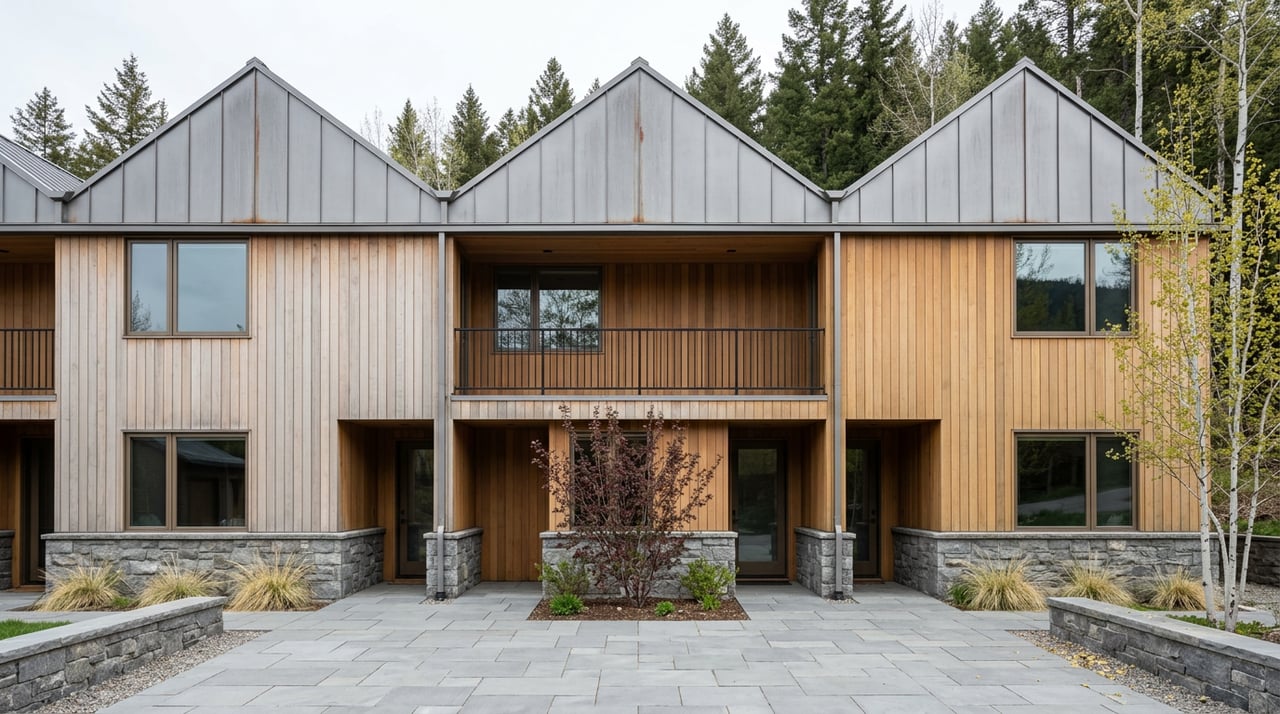
A listing that's been running as a short-term rental advertises its nightly rate like a fixture of the house, right alongside the fireplace and the mountain view. It isn't one. In Aspen, the right to rent a home short-term belongs to the person who holds the permit, not the address, and that permit stops working the moment title changes hands.
This catches buyers off guard more often than almost anything else in an Aspen transaction, and it has nothing to do with the sale price. It has to do with a zoning line that most portals never show you.
The permit belongs to a person, not a property
Aspen's short-term rental system runs on three permit types, and the one that matters most for investment-minded buyers is the STR-Classic, or STR-C, which allows unlimited rental nights on a non-owner-occupied home. These permits are issued per person, tied to a specific permittee, and they do not automatically follow the deed. Buy a condo that's been legally short-term rented for a decade, and the seller's permit ends at closing. You start over.
Starting over means applying fresh, and if the zone is capped, that application does not become a permit. It becomes a place in line.
What that line actually looks like
Ben Wolff, general manager at Frias Properties of Aspen, manages hundreds of short-term rentals across the city, including plenty in the residential/multifamily zone, known as R/MF, where the wait is longest. When a new owner calls asking what to do, his answer is consistent: get on the waitlist, and expect it to take two to three years.
Two to three years is not a rounding error on a rental pro forma. It is the difference between a property that pays for itself and one that sits as a straight carrying cost while the paperwork clears.
Why R/MF is the zone to watch
Aspen's 14 residential zone districts each carry their own STR-C cap, and the caps were never meant to be equal. They range from a single permit allowed in the smallest-lot zones, R-3 and R-30, up to 190 permits in R/MF, the city's higher-density zone that covers a mix of condo buildings and multifamily lots scattered through town, with its largest concentration sitting east of the downtown core between Original Street and the Roaring Fork River.
When the city set those caps in 2022, it grandfathered in every permit that existed before the moratorium, regardless of whether that pushed a zone over its new limit. R/MF blew past its cap almost immediately, holding 235 active permits against a 190-permit ceiling.
Attrition has been closing that gap slowly. As of May 2026, R/MF was down to 187 active permits, just under the cap, with three more pending. But the waitlist behind those permits had grown to 55 applicants.
Compare that to the rest of the system. Most other capped zones in Aspen carry waitlists of fewer than five names, and some have none at all. R/MF alone accounts for the overwhelming majority of everyone waiting for a permit in the entire city. The city adds new names to that list at a rate of roughly 12 a year while losing permits to attrition at a rate of about 20 a year, so the line does move, just not quickly.
What's actually at stake in dollars
The reason this matters financially is that Aspen short-term rentals are not a marginal side income. An analysis of city rental data found that during the Fourth of July week in 2026, the average nightly rate across active listings reached roughly $5,504, more than double the median of $2,239, with 16 properties renting above $10,000 a night and one above $30,000.
Even in the off-peak window of mid-January, the average sat around $3,606 against a median of $1,887. On the luxury end, separate data from high-end rental platforms put the year-round median nightly rate near $7,292, with an average of $11,724 across all seasons.
That is real income, and it is exactly the kind of number that shows up in a seller's marketing materials or a listing agent's pitch. What it does not show is that none of it transfers with the sale unless the buyer already holds a valid permit or the zone happens to have room.
The one narrow exception the city carved out
Aspen's city council has had chances to loosen this and largely declined. Last year, staff recommended keeping the R/MF cap exactly where it is, and council agreed. Mayor Rachel Richards has been direct about the reasoning, pointing out that anyone stuck on the waitlist still qualifies for an owner-occupied permit or can rent the property long-term, and that raising the cap risks converting the zone entirely into short-term inventory rather than a place people actually live.
The one adjustment council did make, through an ordinance approved November 18, 2025, was narrow. Permits can now transfer to a next of kin who holds at least 10 percent ownership interest, but only in the event of the permittee's death or divorce.
The same update created a new STR-Temporary permit, letting a new owner honor guest reservations that were already booked before the sale closed, so a family with a trip planned for next spring isn't stranded when the property changes hands mid-contract. Outside of those two situations, the rule holds: sell the house, lose the permit.
A wider trend worth watching, but not yet the rule in the city
Unincorporated Pitkin County, which covers the rural land outside Aspen's city limits, is considering a different structure entirely. County commissioners spent a work session on August 19, 2026 reviewing a proposal that would scrap the current rule requiring proof of rental history between 2017 and 2022, replacing it with caps tied to geographic planning areas, from as little as 1 to 2 percent of residential parcels in remote zones near Maroon and Castle Creek to 5 to 6 percent in busier areas like Starwood, Redstone, and the Aspen urban growth boundary.
That system would not apply inside Aspen city limits, where the current zone-cap structure remains in place, but it signals that regulators across the valley are actively rewriting these rules rather than leaving them alone.
Before you write an offer on anything advertised as an income property
- Ask the listing agent for the property's zone district, not just its neighborhood name, and confirm it against the city's official STR map.
- Ask whether the current STR-C permit is active, current on renewal, and shows tax filings for the past year. A permit with zero tax filings in a 12-month window is treated as abandoned.
- If the zone is capped, ask for the current waitlist count and how quickly that specific zone has been moving. R/MF and a handful of others move much slower than the rest.
- Do not assume owner-occupied use solves the problem if your plan depends on non-owner-occupied rental income. An STR-OO permit carries different rules and a 120-night limit.
- Build the waitlist timeline into your financing plan the same way you would a renovation timeline. Two to three years of carrying cost without rental income changes the math on almost any deal.
A short FAQ
Does an Aspen STR permit ever pass to a new owner automatically? Only in the case of the permittee's death or divorce, and only to a next of kin holding at least 10 percent ownership. Every other sale terminates the permit at closing.
If a zone isn't capped, can I always get a new permit? Zones without caps, largely the commercial core and lodging districts, allow unlimited STR-C permits. Residential zones outside that core are where the caps and waitlists apply.
Does this apply to Snowmass Village or unincorporated Pitkin County the same way? No. Snowmass Village runs its own permitting system, and unincorporated Pitkin County has separate rules that are currently under review. This structure is specific to the City of Aspen.
If you're weighing an Aspen property for its rental potential, the zone district matters as much as the square footage. Jessica Hughes has spent a career inside these neighborhoods and can walk you through exactly what a specific address's zoning means for your plans before you're locked into a contract. Schedule a confidential consultation to talk through the property you have in mind.